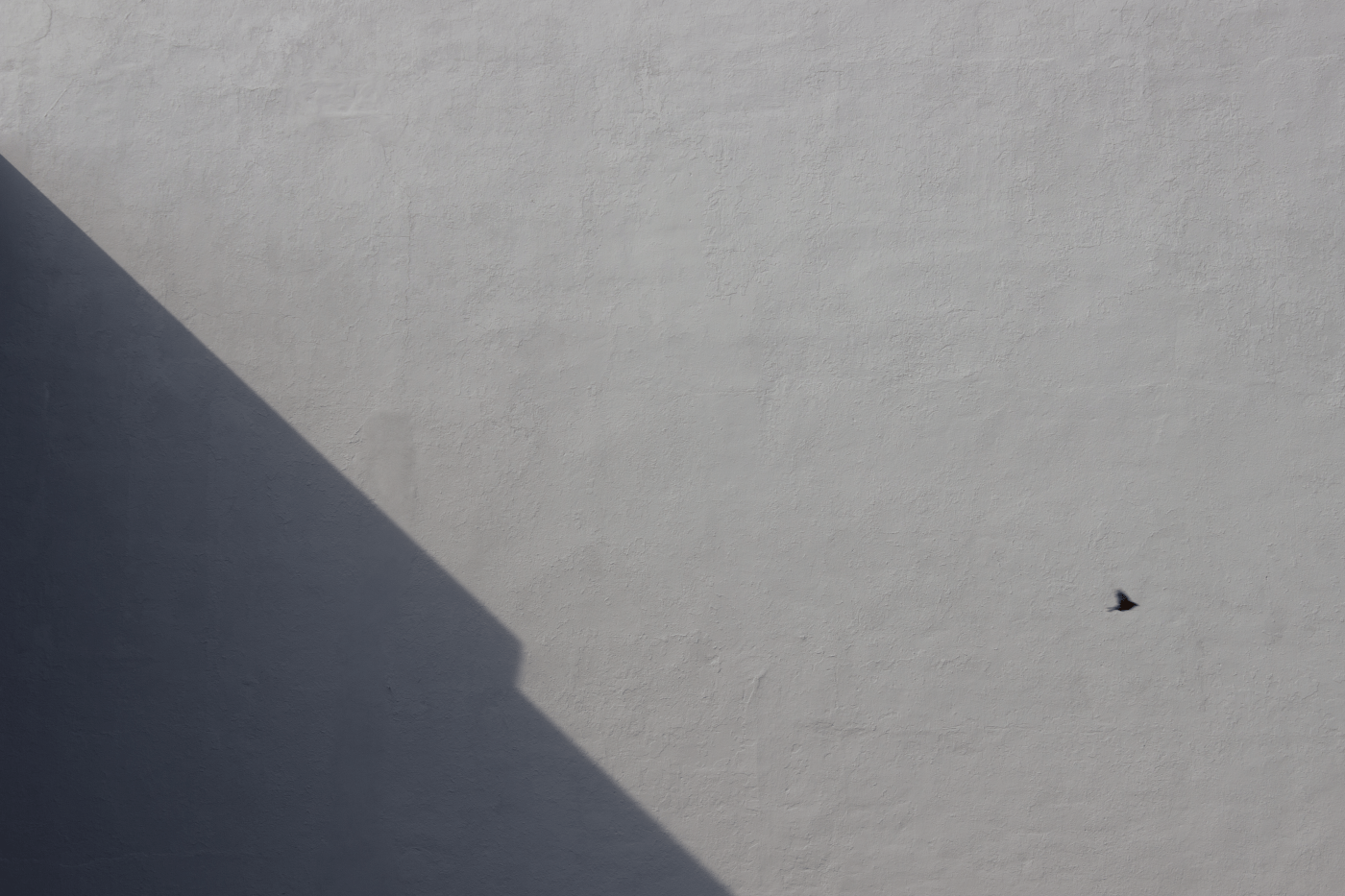
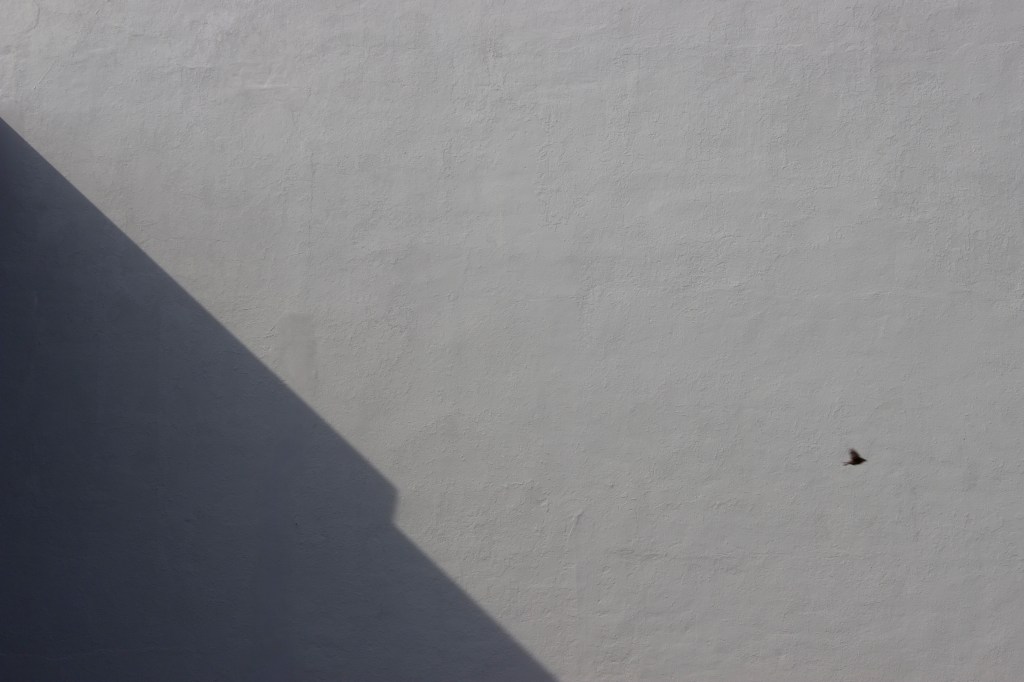
August 15, 2022
Lately I’ve had a feeling occur during certain passing moments that I could disappear into a fold in reality. The feeling emerges when I’m in motion, either walking or driving. The form of disappearance that seems to be calling me forth is a disappearance into the ordinary. Not a “falling into the they” but rather a deeper understanding that I am simultaneously inseparable from the world and complicit in it, but yet also capable of resisting it and standing apart from it from within. I wouldn’t have to change a thing outwardly, I could go about my ordinary days but simultaneously occupy a place of peace apart from all activity; live out the rest of my life in relative anonymity to human beings — to live like a bird — forgoing all desire for attention or recognition from the world and devoting my desire only to maintaining an active humility as I dwell before God. Whether or not I am actually capable of living by this feeling, or following the call remains to be seen, it would be a challenge to tend to the inner garden and continue to prevent the sprouts of pride and vanity from growing.
*
August 16, 2022
*
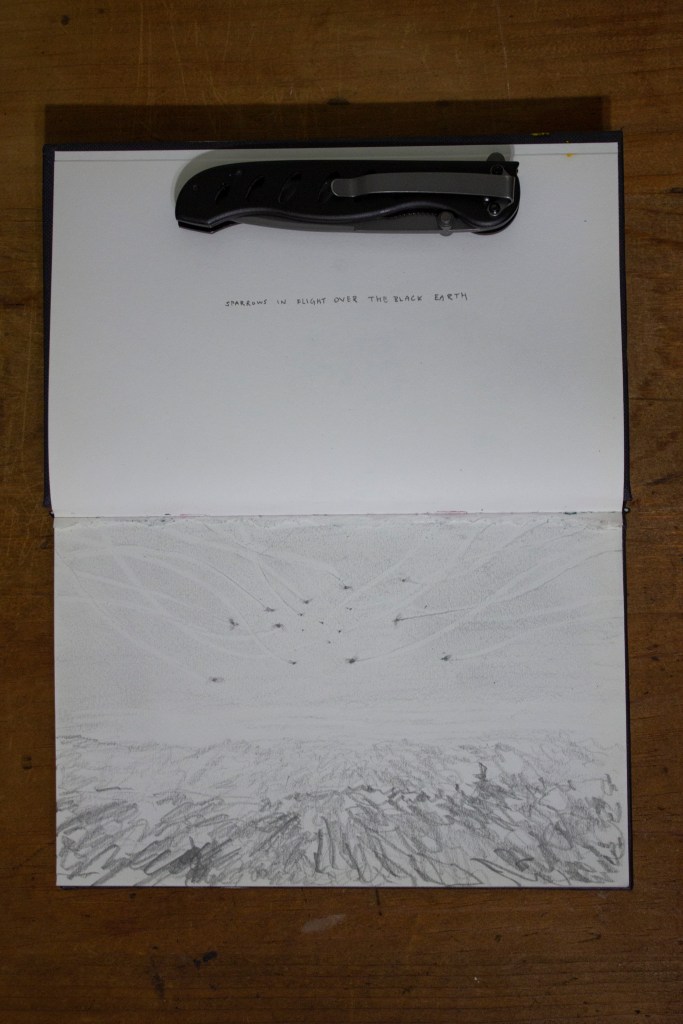
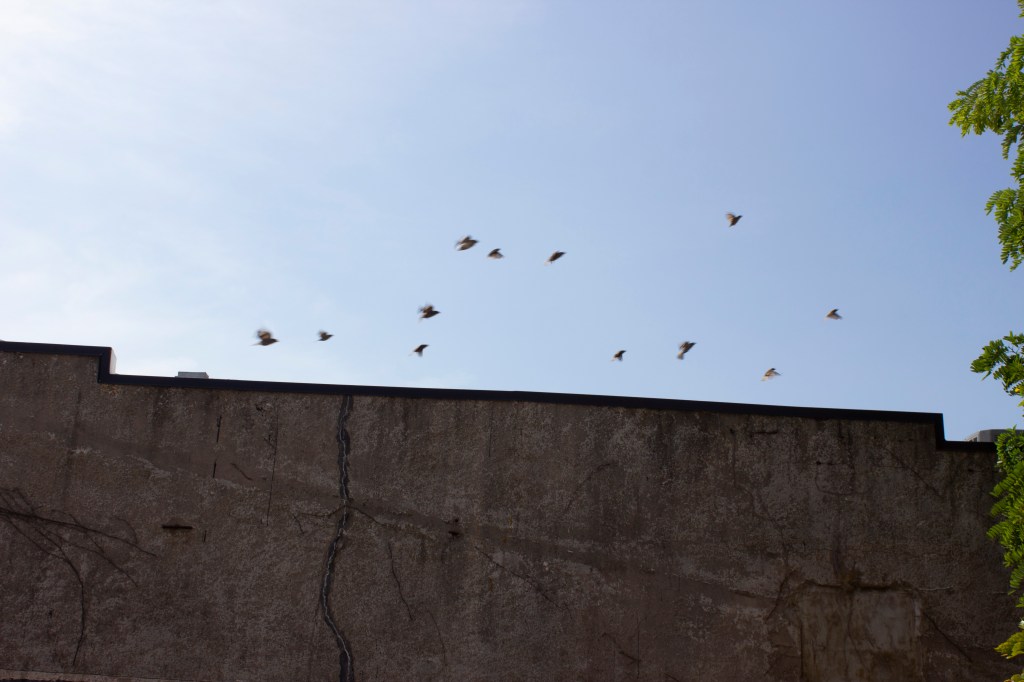
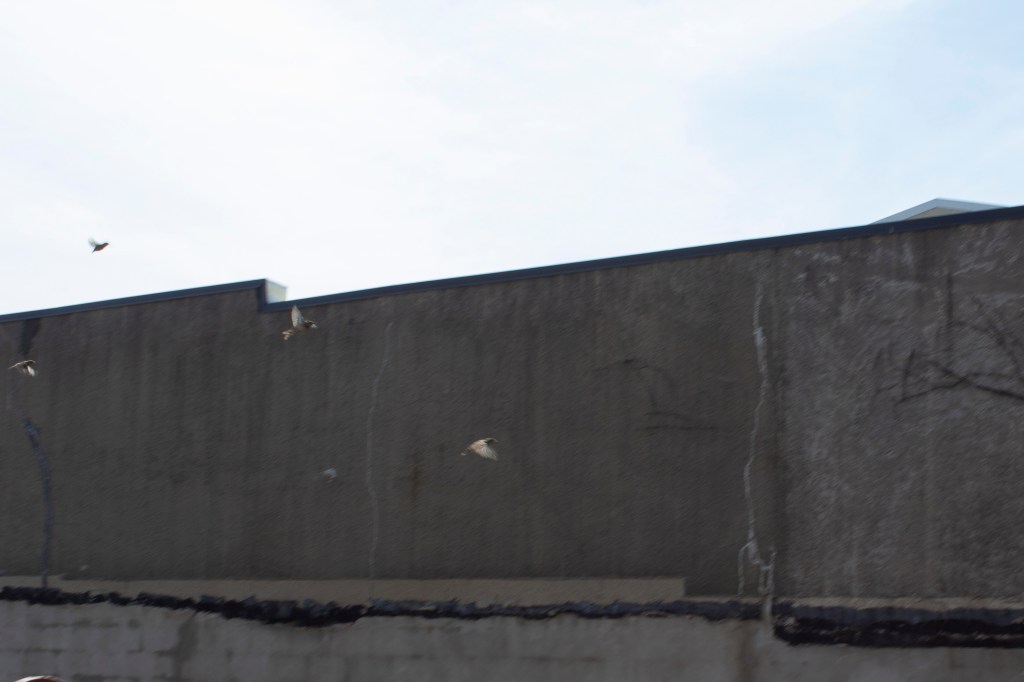
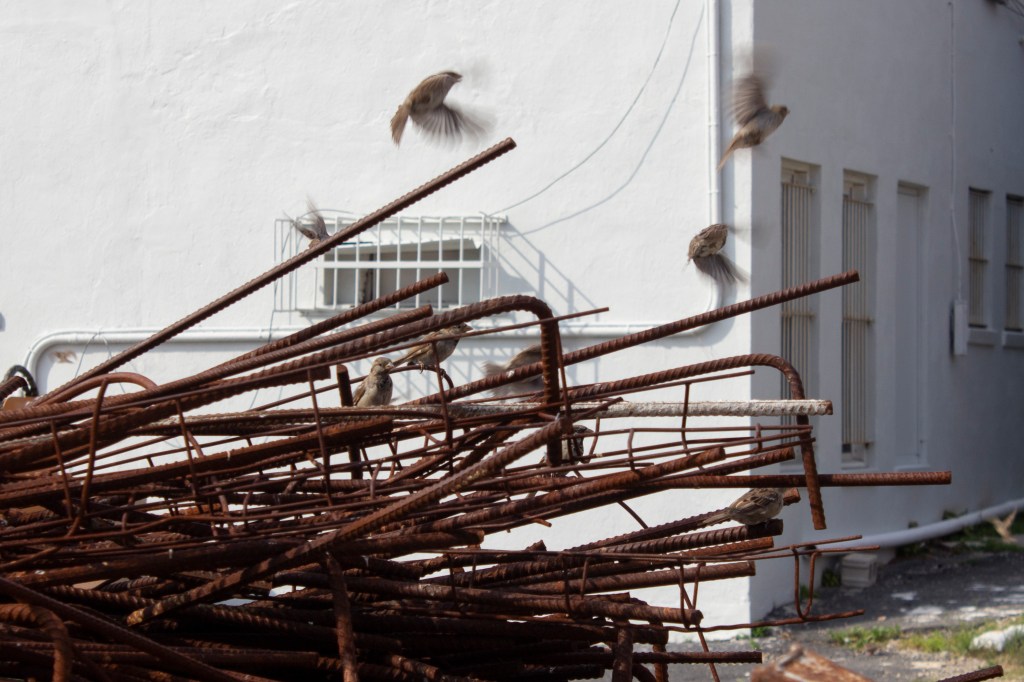
Sparrows in flight over the black earth
Leaving streaks of light in air
*
August 17, 2022
*
August 18, 2022

*
August 19, 2022
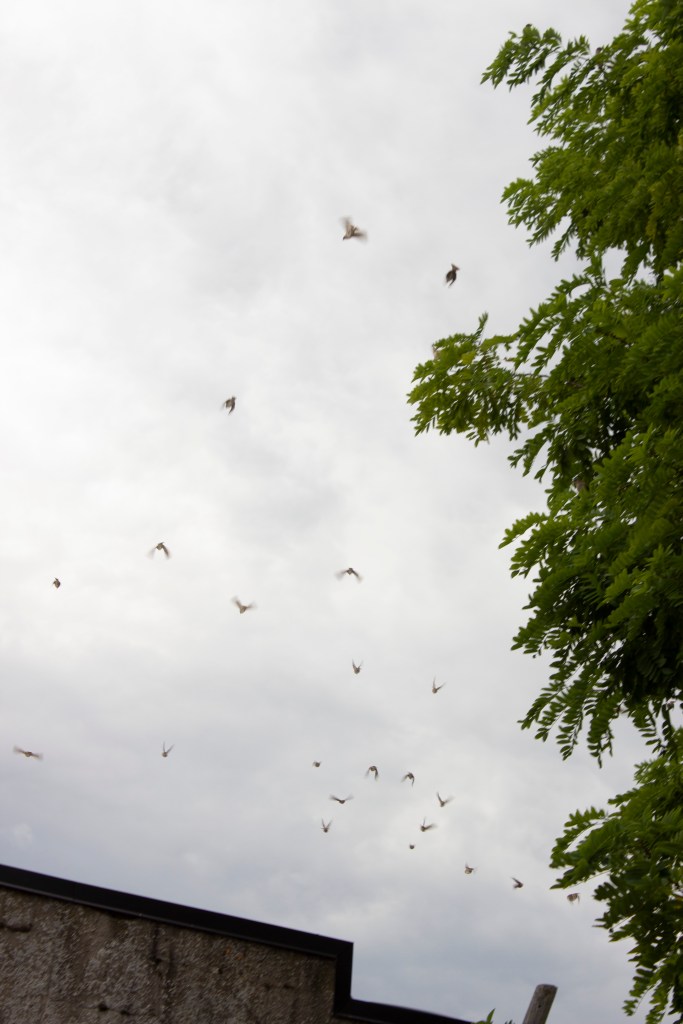
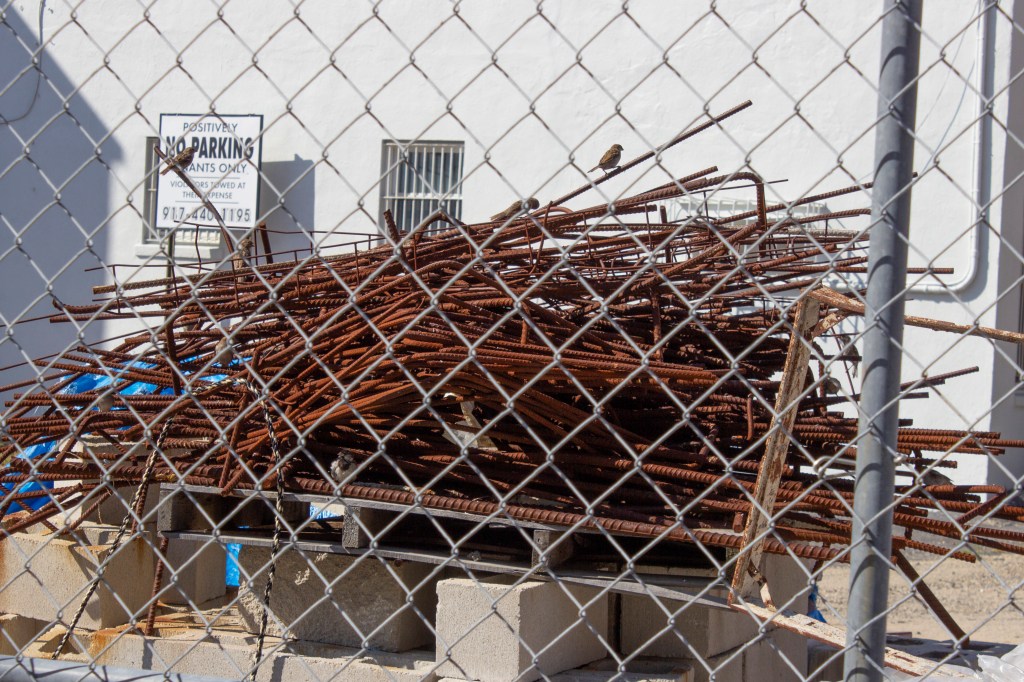
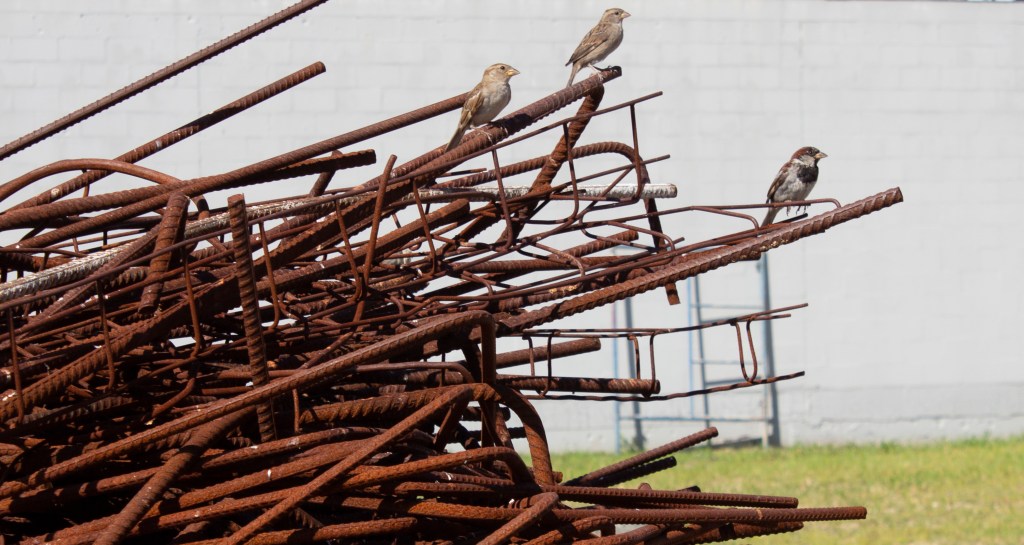
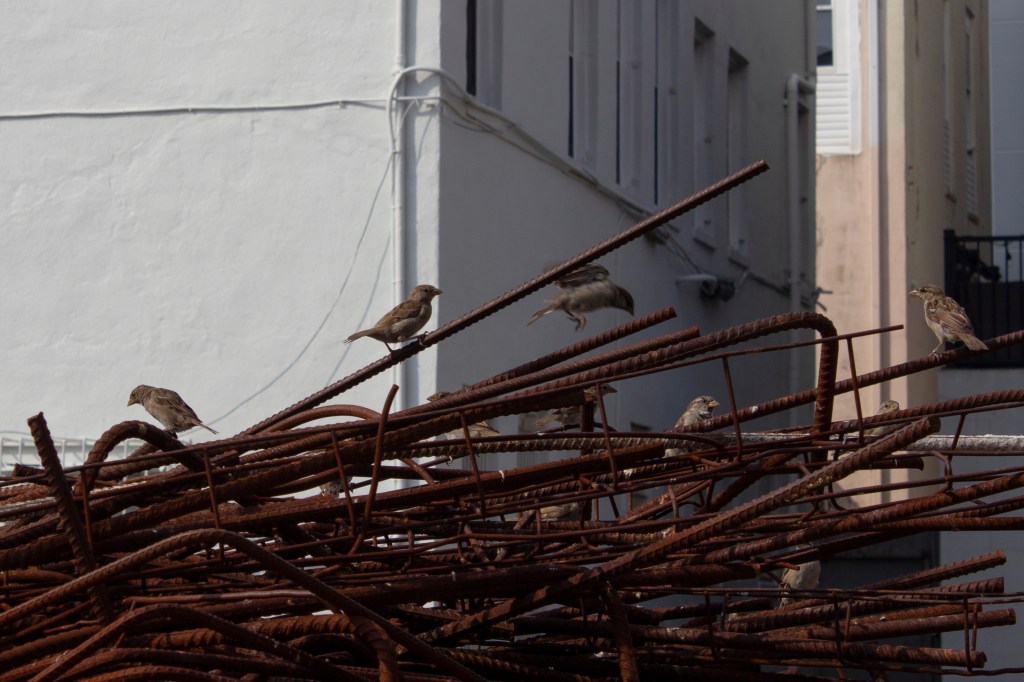
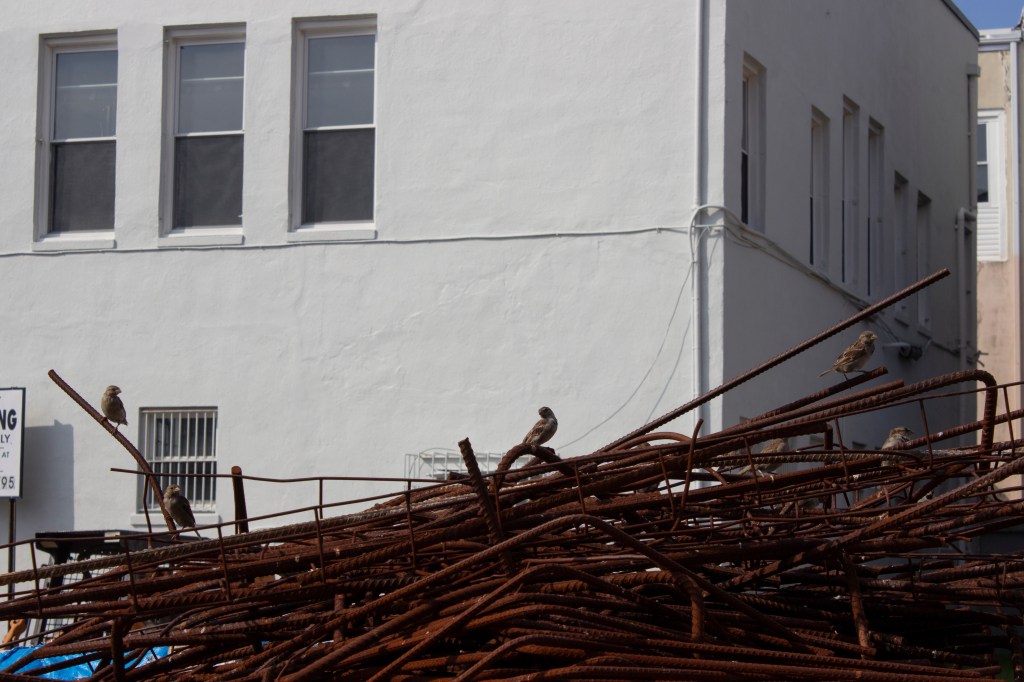
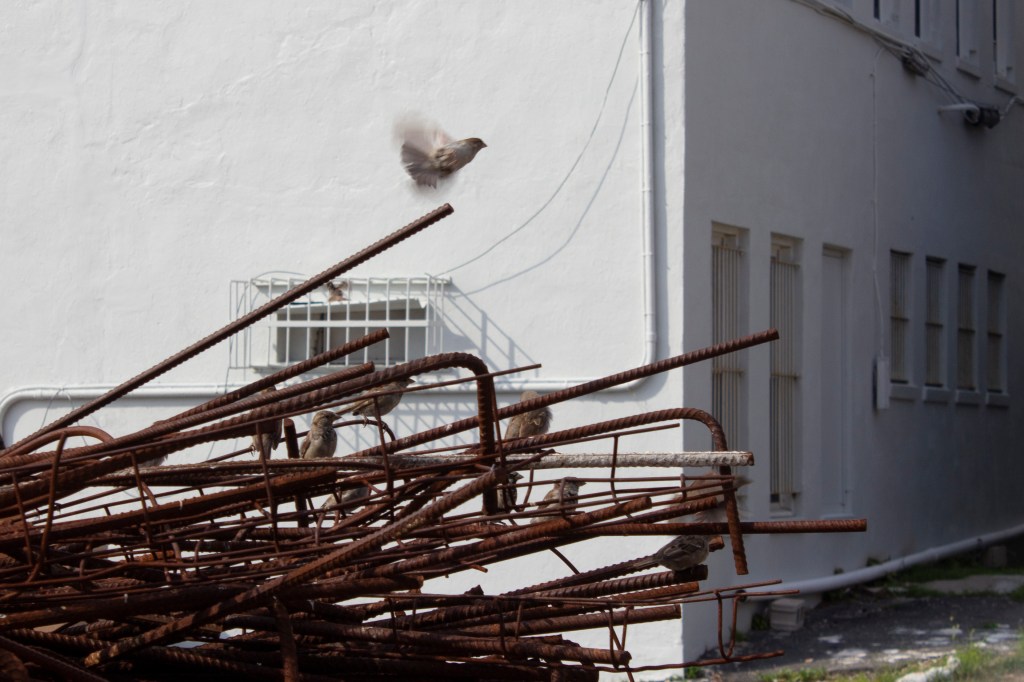
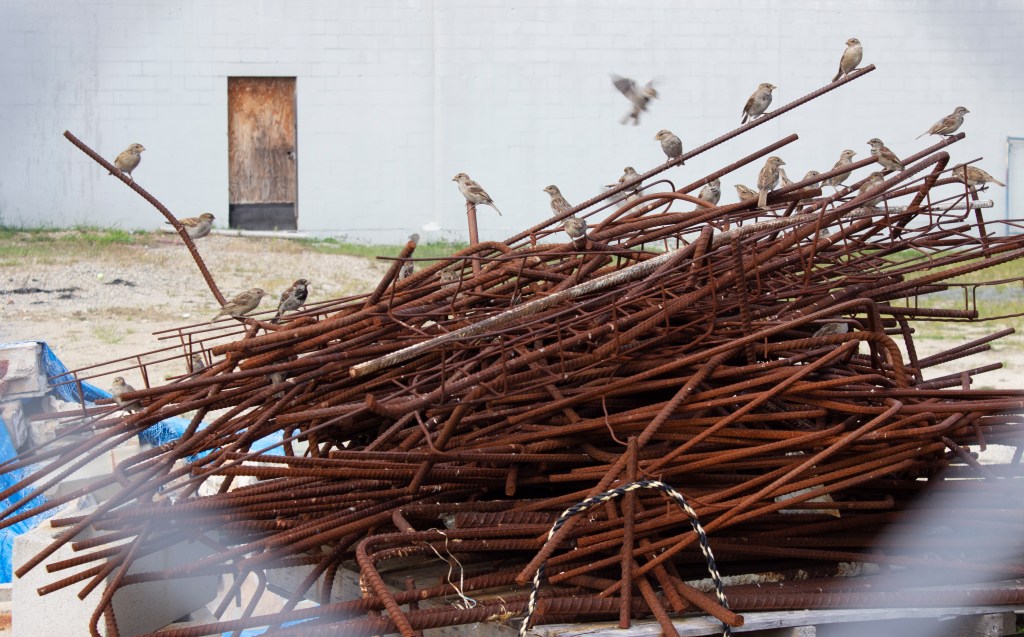
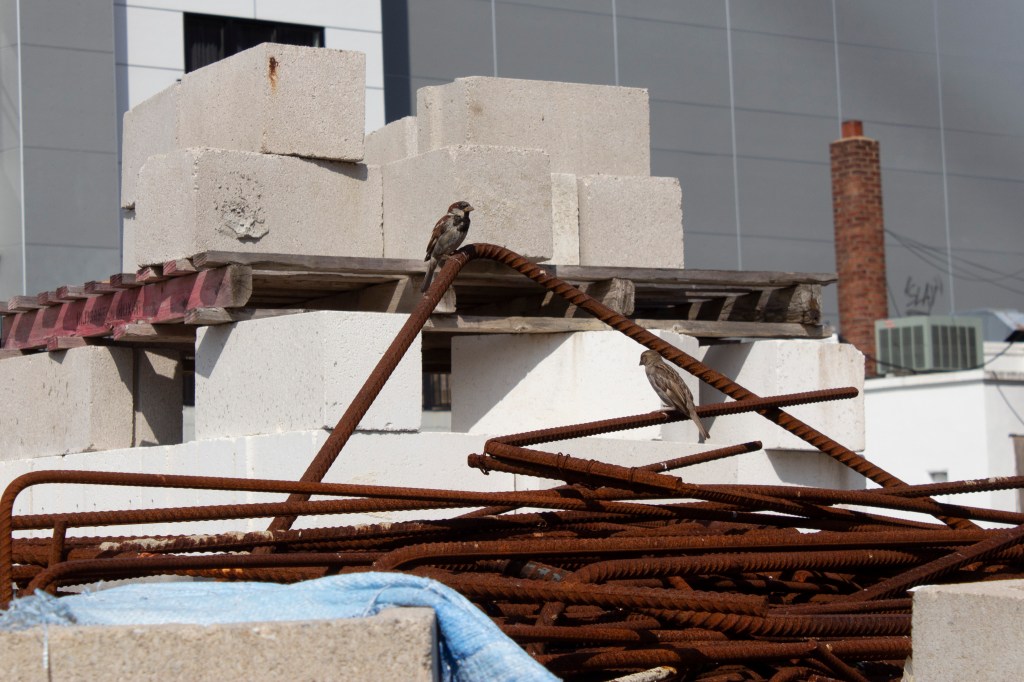
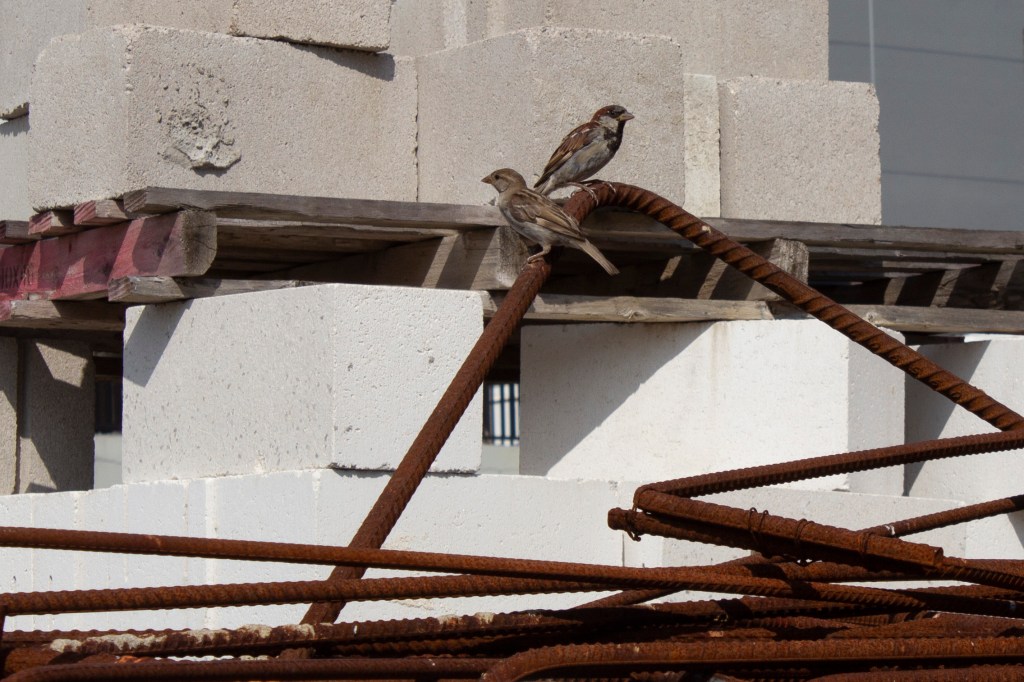
I imagined today a vision of steel rafters of an unfinished building, standing like an architectural skeleton. On the beams are birds, sparrows — & they fly through the cubes of space of the beams, through the rectangular & square openings where one day walls will be. The lines of their flight like white light in twilight air. And then I imagined the building completed with walls & floors & doors & windows. But I saw the lines of flights from the sparrows imprinted in the air of eternity, lingering on the eye of all space. The lines of the birds flight go on passing through walls & swooshing through floors & ceilings. Not ghosts, just the unconfinable spirit of pure motion that can’t be prevented by what remains static and frozen. The spirits of birds swooping through the substance of sight.
*
August 20, 2022
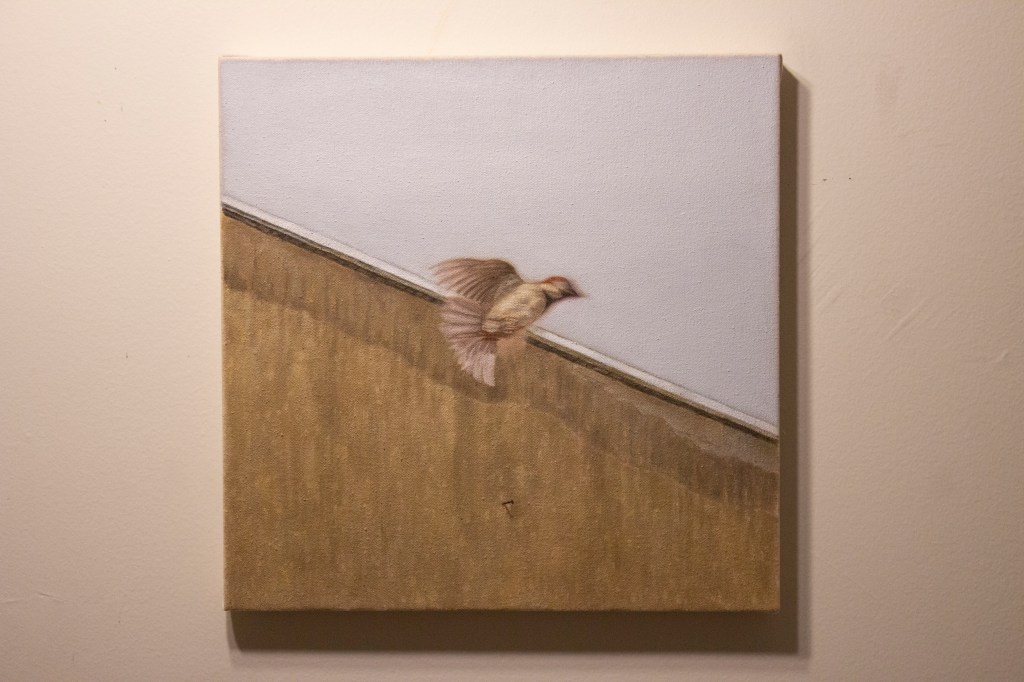
Sparrow & Nail
13″ x 13″
Oil paint on canvas
*
August 21. 2022
The sparrows are fleeting & ubiquitous,
short-lived forms; they flit through the world,
forever both arriving & departing, perching & diving,
darting through air —
The sparrow doesn’t die but each one perishes.
They live everywhere, but in the folds of reality,
in the nothing spaces, making centers of the margins.
The sparrow has extension into time,
beyond what the human will know –
In the end, before the infinity of Beauty,
The final breath pangs
Of sparrows will
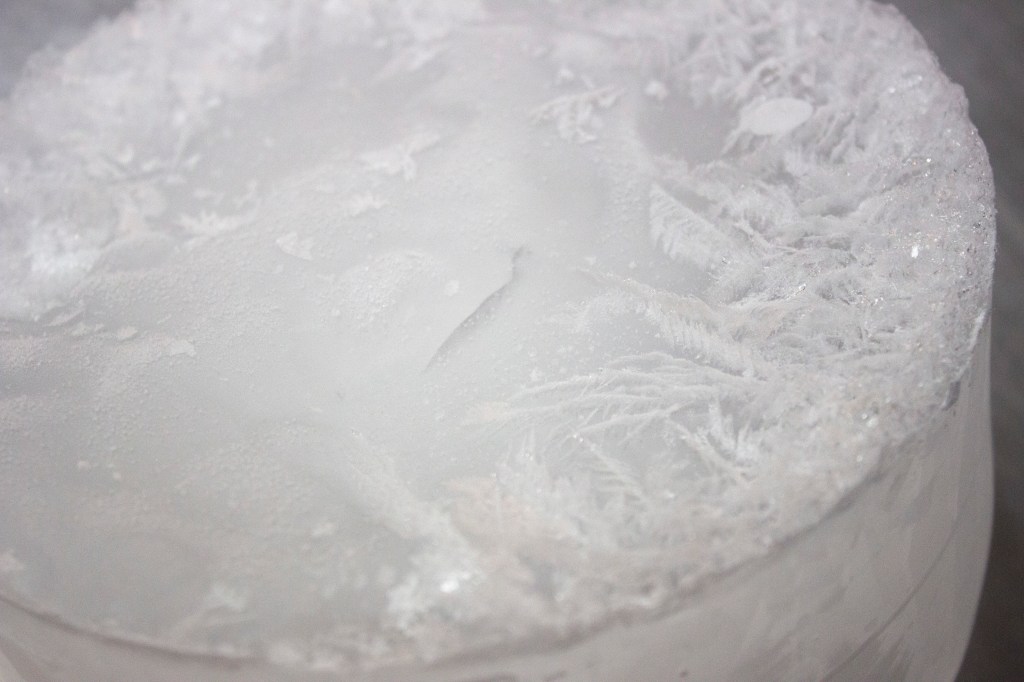
Condensate on the panes of the
Spinning book of the trichilocosm
& freeze into feathers of frost
*
August 22, 2022
The paintings of the birds in flight feel like an artistic process that is a peeling off of layers of myself, a type of shedding, becoming lighter – rather than art I’ve made in the past that feels like adding on armor.
The brush resembles the tip of the wing.
August 23, 2022
*
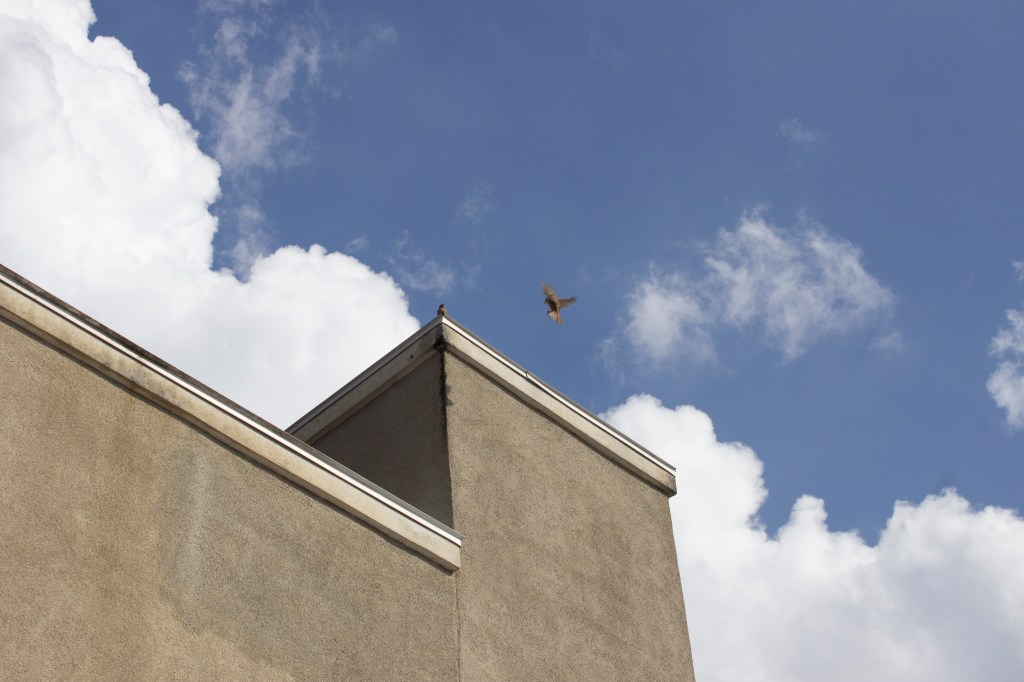
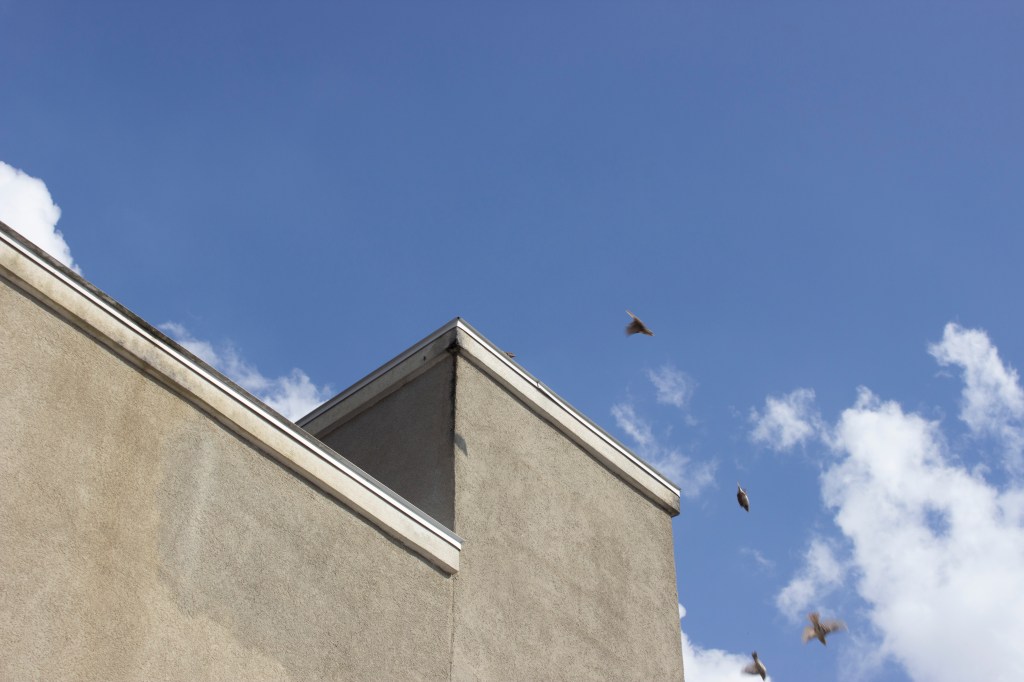
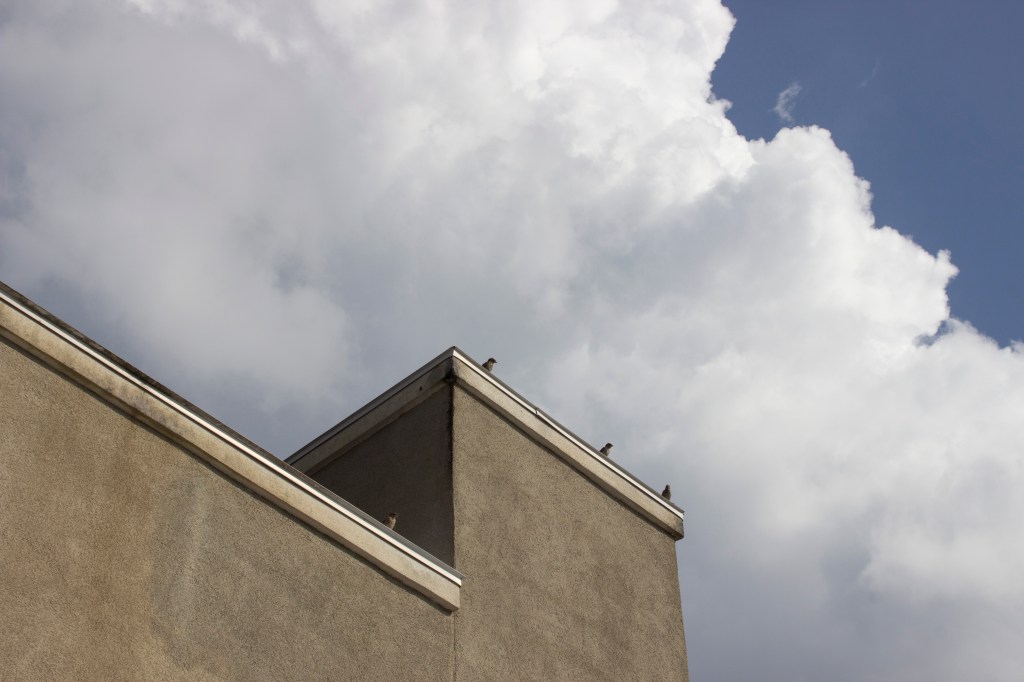
The other day I saw images of polar bears scavenging on a mountain of human garbage. In the caption of the photo was something about the amount of plastic found in the digestive tract of a recently deceased polar bear. Seeing the majestic bears reduced to such a state brought me to a place of a certain despair. I thought what can an artist do in a world at this stage? I sensed all the paths that were suddenly closed — I can’t bring myself to paint still lives or portraits of people or modernist high minded abstraction. I’m not sure why these paths feel closed exactly, but they do. Plein air painting is a good practice but it would have to be done by a real poet dead set on perceiving at the threshold. In any case, I reflected deeply on the role of the artist. I considered the blurry bird paintings I am currently unfolding and somehow this path still feels open. I don’t know why. Perhaps it has to do with the world that sparrows occupy being separate from ours & yet inseparable — what do I mean — I mean that the sparrows live in the cracks and folds of the world, they feel somehow ahistorical & are beings of multiplicity beyond identity. They are ubiquitous & yet small & fragile — humble birds — with short life spans, subsisting on crumbs & carrying small stones in their stomachs. They occupy the nothing spaces, the places that no one ever sees, or has reason to look. When we see the sparrows they are blurry, in flight, flashes of light on their wings, perching & then diving into air. The point is that they occupy a separate world within the human world. To paint from within the world of the sparrow still feels possible. I don’t know how to paint in the human world.
I don’t know how to reconcile that art is always some type of offering to the human world, work that seeks to open the space of perceiving…The work of art has it’s own type of object-life in the world, perhaps art also can create its own world within the world, perhaps there is a beauty to the way the blurry birds will navigate time. Perhaps beauty is enough.
An image came to my mind the other day, of the lines of flight of birds throughout all time remaining in the air like streaks of transparent light — I saw the air as completely filled with them like luminous threads and I imagined that all the invisible lines of flight left suspended in air were like the highways of flight that each bird now uses, turning from one onto the other to make a new line composed of a unique combination of preexisting lines & so on. I imagined a type of fugue of illumination on the invisible threads in the air being sung throughout vast scopes of time as the birds fly through air.
The spirit of the bird is the totality of its flight line suspended in the air like a luminous thread for all eternity.
*
August 25, 2022
*
*
August 26, 2022
I read Ada Limón’s book The Hurting Kind the other week and there are a few lines that keep coming to mind. One is about a Kinigfisher in blue plumage on a transmission wire, watching the water pass below, “eyeing the creek for crayfish, tadpoles, and minnows”. She writes,
People were nothing to that bird, hovering over
the creek. I was nothing to that bird, which wasn’t
concerned with history’s bloody battles or why
the creek was called Drowning Creek, a name
I love thought it gives me shivers, because
it sounds like an order, a place where one
goes to drown. The bird doesn’t call the creek
That name. The bird doesn’t call it anything.
I’m almost certain, though I am certain
of nothing. There is a solitude in this world
I cannot pierce. I would die for it.
(Excerot from the poem titled Drowning Creek)
*
There is another poem about a Fox:
And, Too, the Fox
Comes with its streak of red
flashing across the lawn, squirrel
bound and bouncing almost
as if it were effortless to hunt,
food being an afterthought or
just a little boring. He doesn’t
say a word. Just uses those four
black feet to silently go about
his work, which doesn’t seem
like work at all by play. Fox
lives on the edges, pieces together
a living out of leftovers and lazy
rodents too slow for the telephone
pole. He takes only what he needs
and lives a life that some might
call small, has a few friends, likes
the grass when it’s soft and green,
never cares how long you watch,
never cares what you need
when you’re watching, never cares
what you do once he is gone.
*
The common thread in these two poems is the way the animals live in the margins of the human world & yet don’t give much mind to it. The fox lives on the edges piecing together leftovers & the kingfisher isn’t concerned with history’s bloody battles. The presence of the animals in the poetic gaze opens an arena of feeling that is freeing — free from concern for the human world, and yet acting from within it too. The Kingfisher is perched on a transmission wire. The animals act from within the world and yet dwell somehow apart from it. This to me is true also of the artist and the poet.
Three quarters of the way through the book there is a poem featuring sparrows:
*
It’s The Season I Often Mistake
Birds for leaves, and leaves for birds.
The tawny yellow mulberry leaves
are always goldfinches tumbling
across the lawn like extreme elation.
The last of the maroon crabapple
ovates are song sparrows that tremble
all at once. And today, just when I
could not stand myself any longer,
a group of field sparrows, which were
actually field sparrows, flew up into
the bare branches of the hackberry
and I almost collapsed: leaves
reattaching themselves to the tree
like a strong spell for reversal. What
else did I expect? What good
is accuracy amidst the perpetual
scattering that unspools the world.
*
My imagination delights in the vision of the sparrows lifting from the grass to the branches and the poet seeing time move in reverse. Suppose it were possible that sparrows are actually moving backward through time. That whatever linear direction humans seem to be traveling through time is opposite to that of the sparrow. That human future is sparrow past. Or perhaps sparrows occupy a non-linear time in which they move forward and backward more easily than a human being. Sparrows moving backward through time – perhaps a title of a future painting, a nod to Ada Limón.
There was a moment about a week ago while driving, I stopped at a traffic light and looked out my driver side window. There was an alleyway of brown bricks and grey concrete, a slant of light that resembled a wing, a long triangle shape stretching across the bricks as the sun set. Window panes reflecting the golden light. I saw the sparrow. There were no birds. It was the attributes and characteristics of the sparrow, abstracted into the alley; as if the sparrow were a mode of perceiving. I drove away and remembered a Masahisa Fukase photo book called Ravens. In the book there are photos of ravens, but as you turn the pages the raven becomes a mode of perceiving. Seagulls become ravens, an overweight prostitute becomes a raven. It becomes clear whats happening in the book, as I remember my experience with it, but its magical too, the unlocking of a mode of perceiving. In Ada Limón’s poem the leaves become sparrows, the sparrows become leaves.
*
Sappho mentions sparrows in the first poem of her complete works and fragments, the ones that have survived their journey through time on shards of clay and tattered parchments, discovered in archaeological digs and chance surfacings. When I first read this poem, aside from being stunned by the beauty of it, I later thought – there were sparrows in Sappho’s time too. The thought struck me as simple and self-evident and even obvious, but somehow also allowed me to feel the unbroken chain of life that connects from this moment in time to the moment when Sappho was composing her poem. In Sappho the sparrows are carrying the chariot of Aphrodite through the middle air:
1
Mind shimmering, deathless Aphrodite,
child of Zeus, weaver of wiles,
I beg you, do not crush my spirit
with anguish, Lady,
but come here now, if ever before
you heard my voice in the distance
and heeded my prayer, left your father’s
golden house,
yoked your chariot pulled by sparrows
swift and beautiful over the black earth,
their wings a blur as they streaked from heaven
through the middle air—
and then you were with me, a smile
playing about your immortal lips
as you asked what was it this time, why was I
calling you again,
what did my heart in its lovesick raving
most want to happen: “Whom now
should I persuade to love you? Who is
wronging you, Sappho?
“She may run now, but she’ll be chasing soon.
She may spurn gifts, but soon she’ll be giving.
She may not love now, but she’ll love soon,
even unwilling.”
Come to me again now, release me
from my agony, fulfill all
that my heart desires, and be at my side.
Fight for me, Goddess.
*
*
*
August 27, 2022
My mind was concerned this morning with many of the threads of thought illustrated in these notes from the past couple weeks. I felt that many of them were flawed or not quite brought to resolution, I considered perhaps I could write responses to my own thoughts and find a way to bring them to a better place. Later in the afternoon on some type of instinct I pulled an Agnes Martin book off my shelf and opened randomly to this passage, from Beauty is the Mystery of Life, and it offered the response that I needed. I hadn’t dared allowed my mind to involve itself with happiness as Agnes does. I made the motion to look past human welfare and comfort, I was prepared to bear witness to beauty, but I had not made the motion to allow for happiness. After reading Agnes it appears so simple and true:
“Art work is the only work in the world that is unmaterialistic. All other work contributes to human welfare and comfort. You can see from this that human welfare and comfort are not the interests of the artist. He is irresponsible because his life goes in a different direction. His mind will be involved with beauty and happiness. It is possible to work at something other than art and maintain this state of mind and be moving ahead as an artist. The unmaterial interest is essential.
The newest trend and the art scene are unnecessary distractions for a serious artist. He will be much more rewarded responding to art of all times and places. Not as art history but considering each piece and its value to him.
You can’t think “My life is more important than the work” and get the work. You have to think the work is paramount in your life. An artist’s life is adventurous. One new thing after another. I have been talking directly to artists but it applies to all. Take advantage to the awareness of perfection in your mind. See perfection in everything around you. See if you can discover your true feelings when listening to music. Make happiness your goal. The way to discover the truth about this life is to discover yourself. Say to yourself: “What do I like and what do I want.” Find out exactly what you want in life. Ask your mind for inspiration about everything.
Beauty illustrates happiness; the wind in the grass, the glistening waves following each other, the flight of birds, all speak of happiness.
The clear blue sky illustrates a different kind of happiness and the soft dark night a different kind. There are an infinite number of different kinds of happiness.”
— Agnes Martin, Beauty is the Mystery of Life
*
 theslowangel.com
Leave a comment