Hidden with Christ in God
(Death Through Love)
“You are dead, and your life is hid with Christ in God.” (Col 3:3)
“God wisely ordained that the inclination to the cross in Jesus’s soul was not completely frustrated of its purpose even after He sat in glory at His right hand. Until the last moments of time He desires that it be exercised in His mystical body into which, as Head, Jesus pours grace. This grace being of the same nature in the Head as in the members, it imposes the same loving weight upon all who receive it. With this in mind St. Paul declared that the love of God caused the predestined to die to all things, to live only in Him who had of His own free will died for them.” (Louis Chardon, The Cross of Jesus pg. 101)
*
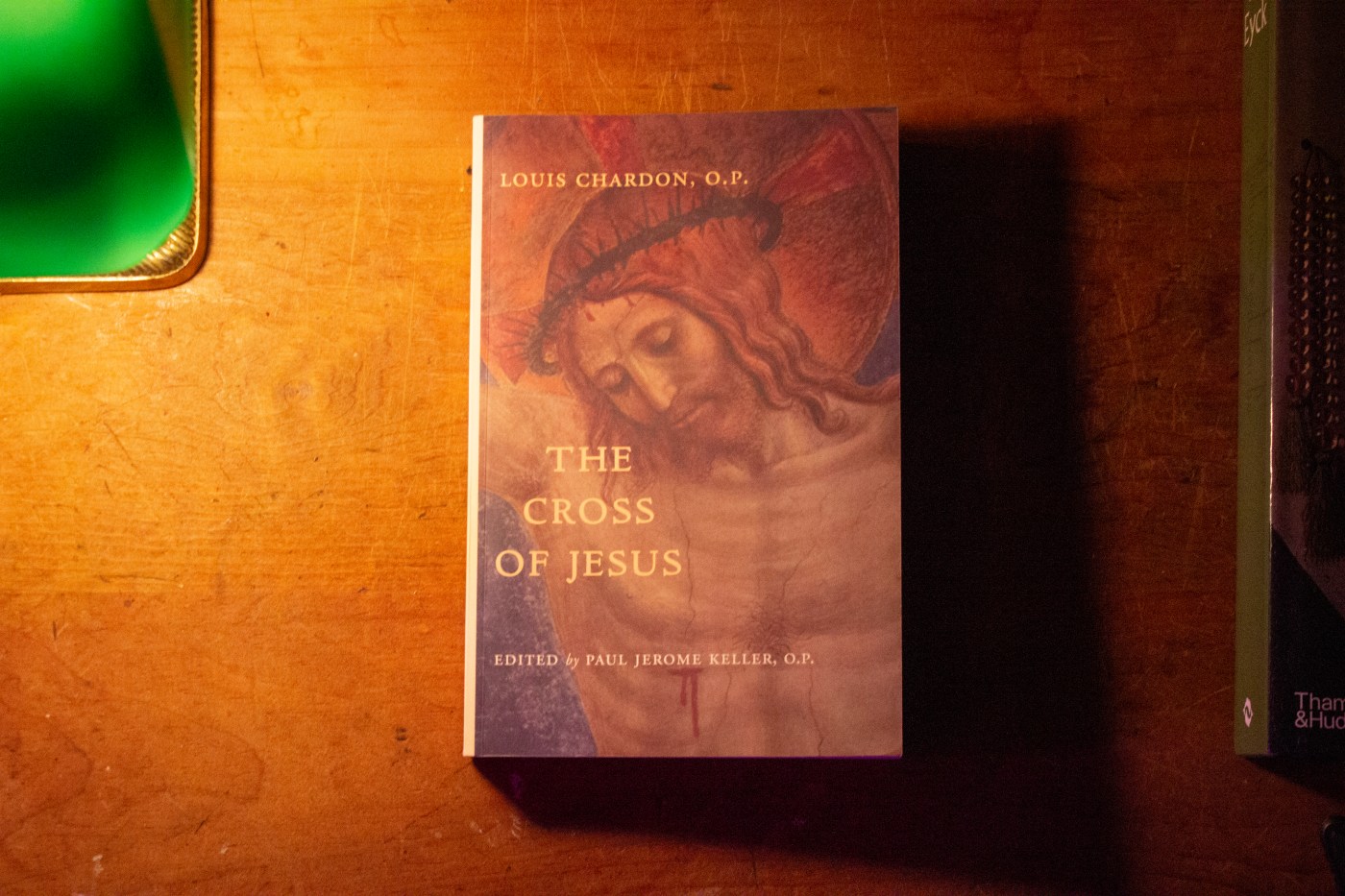
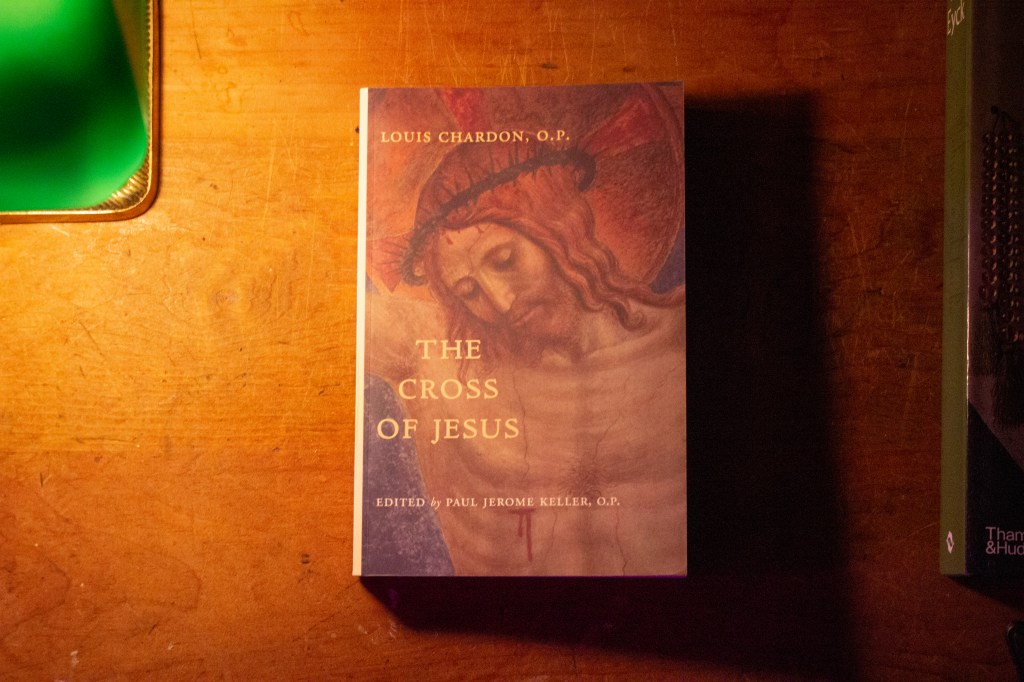
I’ve been reading a book by Louis Chardon called The Cross of Jesus. Considered to be his masterpiece, it was published in Paris four years before his death in 1651, at the age of 56. He lived a simple and hidden life as a Dominican priest. The Cross of Jesus has been newly edited and presented by Paul Jerome Keller. O.P.
In the introduction, Keller writes,
“This work is at once speculative and practical, a happy blending of theological science and mystical experience. Using as his main theme the spiritual progress of the Christian through the cross of Christ, the author has grouped around it the principal doctrines of the spiritual life. The treatise as a whole is characterized by precision and logical order…The book itself was not written for professional theologians, but for holy souls…
The Cross of Jesus is divided into three sections, the first of which is a treatise on grace and the mystical body. The second section is a practical illustration of the doctrine contained in the first section. Some critics consider this treatise a digression, but Christian souls will find in it much enlightenment and encouragement. Without mentioning them explicitly, Chardon refers to the three ways or stages of the road to perfection, although he prefers to emphasize the two states: consolation and desolation. Since the life of Christ was a continual movement toward the cross, the spiritual progress of the Christian will be measured by his approach to the cross. Even preserving the traditional threefold divisions of the spiritual life, one can say with Chardon that the beginners usually enjoy spiritual consolations, the proficients are those who enter upon desolation and suffering, and the perfect are those who at the apex of their desolation find perfect union with Christ. In the third section Chardon resumes the exposition of the doctrine on grace, not now as a participation in the life of Christ, but as a participation in the life of the Trinity. As a result, he speaks at length of the divine indwelling and the invisible missions of the Trinity and he explains in a masterful fashion how the cross of the Christian empties the soul of self-love and thus prepares a place for the divine indwelling…
The spiritual desolations described in the second section of the work separate the soul from all that is not God and thus prepare a place for the invisible missions.”
*
For the purposes of this post I would like to focus on one chapter, chapter 20, Death Through Love. This chapter has struck a deep chord in me. Perhaps this reveals something about where I am in my own spiritual journey. I feel called to have the courage to die to the world each day and to choose to live hidden with Christ in God. I often tremble on the threshold of this event, struggling each day to forego my worldly concerns and impatience and ambitions and return my attention to eternity. In this chapter I found courage and confirmation. I’ll turn for a moment to Chardon,
“Elsewhere St. Paul wrote: “You are dead, and your life is hid with Christ in God.” But this Christ was full of opprobrium, not majesty; not crowned with glory, but filled with misery; not a living source of consolation, but a profound abyss of unbearable sorrows. Our life is hid with Christ in God; with Christ, not as giving but as depriving, not as terminating His love in our bosom, but taking away our love from our hearts and separating us from our own pleasure. “You are dead,” says St. Paul, “and your death is not without life, although this life is a secret and a hidden one. For although your love is a principle of detachment, it has still for its end that sovereign union or that divine unity which Christ sought for us from the Father toward the end of His last discourse in the Cenacle.” His words initiated this sublime separation from all consolation: “Holy Father, for them do I sanctify Myself, that they also may be sanctified.” (Louis Chardon, The Cross of Jesus, pg. 101)
We die to the world, and our life is hidden with Christ in God; sovereign union with Christ becomes our end, but we are still far away from that end. While we live hidden in Christ we live in a “profound abyss of unbearable sorrows”. We do not always experience consolation, in fact Christ will actively separate us from consolation and from our own pleasure so that we may learn to give our love to God and keep our attention on eternity. Christ not only meets us at any depth of misery or shame or sorrow, but in fact will actively work in us with misery and shame and sorrow to take us through desolation and lead us to divine union. Part of our discovering of divine union is our learning to unite our suffering with Christ. We learn to surrender ourselves to suffering rather than seeking to avoid it and we become willing to suffer because it unites us with Christ. In the depths of this abyss of sorrows we discover the inclination to the cross that will lead us to sovereign union.
“Our Lord did not refer to a habitual, inward sanctification, for as He contains in Himself the plenitude of this grace, He is not to be numbered with those spoken of by the angel in the Apocalypse: He that is just, let him be justified still, and he that is holy, let him be sanctified still.” Now is there any question of a legal sanctification which consisted in ablutions, fastings, and ceremonies designed to cleanse from moral stain. Such stains may not have touched the soul, but they were at least considered to do so by the Law which He had come not to destroy but to fulfill. Then too, that sort of sanctification profited only the one who had incurred legal stain. Christ spoke of a quite different kind of sanctification. The Scriptures often use the word “sanctification” to mean a separation from something. Jeremiah asks the Lord to sanctify, that is, set apart, separate the wicked for “the day of slaughter.” In like manner the faithful were sanctified by Nehemia when he separated them from their idolatrous wives, and the day on which that separation took place was called a day of sanctification.” (Louis Chardon, The Cross of Jesus, pg. 102)
Sanctification is related to separation. Separation can mean many things; separation from consolation, separation from the wicked, separation from worldly idolatry. Christ is sanctified, and therefore we become sanctified by his grace. We cannot inwardly sanctify ourselves without Christ. Human law cannot sanctify, even though it attempts to deal with justice. Only through our detachment from the world and by our faith in Christ do we offer ourselves to sanctity.
“And yet not every separation is a sanctification. It is true that there can be no sanctification without a separation from everything that is not God and his essential holiness. Dionysius tells us that holiness is a detachment or a separation from everything that is impure, inferior, base or vile. He wisely concludes that only God is perfectly holy because His being and operation are infinitely elevated above all things dependent upon Him. He does not contract any stain or ungodlike quality. He is in all things and His is all things, and yet He remains far-removed from all things.
None of God’s attributes can compare with his Holiness. All the divine perfections are, in the immensity of God, equal, being identified with God and His holiness; but whereas the other attributes of God have in some way a relation to creatures, His holiness sets Him entirely apart from them. God is the more holy as He is absolutely separated, and His holiness raises our minds to a more profound knowledge and a more perfect imitation of his divinity.” (Louis Chardon, The Cross of Jesus, pg. 102-103)
In humility one recognizes that only God is pure, and all else is inferior. In holiness we make the motion of detaching from all that is impure and we long for God in his purity. God has infinite attributes, but remains nonetheless far removed from all things in His perfection. His holiness is separate from his attributes. By way of His holiness one perceives with the mind the way of separation that leads to sanctity. In perceiving this way of separation, one seeks to bring one’s actions in alignment with divinity. There is a type of consolation that occurs in contemplation of God’s perfection as one recognizes that one cannot add anything to Him. It is an antidote to ambition and impatience to recognize that God does not need us for His glory, and that we are sustained only by His Love. This Love teaches us to die to the world, and to direct our love to God.
“Love is perfect in proportion as it resembles that of Christ. Jesus’ love is absolutely perfect because He is the perfect imitation of the love of His Father. Human love is great in proportion as it prepares for and leads to a more intimate union, and union is closest and most intimate when there is in it the greatest separation from everything that does not direct our love to God. The same love is therefore at one and the same time a principle of life and a principle of death. It unites and separates, gathers and isolates, it is near, yet distant, it detaches and is a cause of intimacy. God’s holiness is communicated to His creatures, but before making them entirely conformed to Him, it first produces in them a general privation of everything incompatible with His immaculate purity. “You are dead, and your life is hid with Christ in God.” (Louis Chardon, The Cross of Jesus, pg. 103)
In accordance with our perception of perfection, one seeks to imitate Christ. The love of Christ is what prepares one for union with God. Union is most intimate in proportion to one’s separation from everything that is not God; one must turn one’s attention entirely to eternity. The love of Christ therefore, is the principle of love and the principle of death – by way of the love of Christ, one dies to the world through privation and is then brought into sanctified union with God.
“Sin is the enemy of grace and the cause of death to the soul. As grace is a sharing in the life of God, a soul dies when it opens the door to sin. But there is another and different death wherein grace expels sin from a soul given over to it. St. Paul spoke of this when he said: “So do you also reckon that you are dead to sin.” The justice of God can produce a death in a soul which Scripture calls the second death; this death rules in hell over spirits confirmed in evil. But there is another death caused by the holiness of God within the souls of those whom it possesses, and to these we may say: “You are dead, and your life is hidden with Christ in God.”
A theologian who studies so that he may adore the infinite perfection of God and not merely to satisfy his curiosity will discern two kinds of sanctity which in God are but one eminent perfection. The first of these is called natural holiness and it is infinitely perfect, above all beings, transcending everything that is or can be created. In its presence not even the highest of the angels are without stain, for they are deeply rooted in nothingness, in which they share more than they do in being. Hence Dionysius says that God dwells in both light and in darkness. In light, because His great purity; in darkness, because the infinite elevation of His sanctity makes it inaccessible to creatures.” ((Louis Chardon, The Cross of Jesus, pg. 103-104)
God’s grace & judgement are what determines the life and death of the soul. Sin takes one out of relation to grace and brings one in relation to judgment. God’s judgment may bring death to the soul, as a result of sin. However God’s grace purges the soul of sin and brings a death that seeks to hide the soul’s life in Him. These are two distinct forms of separating and sanctifying carried out by “one eminent perfection”.
“God lives in an incomprehensible purity; rather, He is Himself a most immaculate and immense purity, free from the slightest shadow of imperfection, without admixture or composition, and wholly set apart from nothingness. He is the sovereign, the necessary, and super-essential being, and He is free of defects which take their rise from non-being, over which He rules as a master, contracting nothing of the imperfection that necessarily belongs to things dependent upon His loving providence. On the contrary, He unceasingly draws all things to Himself from that nothingness, to give them their particular share of that which He is. Because He is being by His very nature, He is also the source of all purity and sanctity.” (Louis Chardon, The Cross of Jesus, pg. 104)
The incomprehensible purity of God is beyond the limits of our cognition, therefore contemplation of Him involves expanding our awareness to the threshold of consciousness, going beyond all the illusions of non-being that we mistake for our daily lives. God remains forever separate from the imperfections and relativities of worldly concern and yet He is constantly drawing all imperfections toward His perfection and purity. Perhaps part of our work is removing the resistance and obstruction to His work; learning how to let go of our attachment to illusions, imperfections, and modes of non-being, and continuing to practice bringing our attention to eternity, rooting ourselves in this practice and praying that we might be purified enough to become an instrument of His will.
“The chief function of that part of providence which concerns the eternal predestination of men and of angels is to convert these beings, to detach them from themselves, and to bring them our from all that is not God. Thus, imitating His sanctity, they become holy even as He is holy. God is the original holiness; just as His being is the source of all beings, He is the original fount and principle of all holiness. His holiness is the fundamental source of the holiness of men and angels, of that ravishing purity which lends such beauty to the Church of Militant and Triumphant.
The second type of holiness we call a holiness of manners. It consists in the loving adherence and union of the will to what is holy and perfect, for the greater the perfection and the more infinite and embracing the love, the more elevated this habitual holiness. Now God is all-pure with an absolute and universal perfection. All perfection resides in the immensity of the divine being as in its original source. From it flow all the causes of holiness which redound to souls that imitate it in some particular perfection of justice. God is immaculate and genuine purity without mixture and free from all alloy, and as He cannot enter into a more excellent or higher and more intimate union with His goodness than that which He has by Hid knowledge and love, we. Must say that He is perfect habitual holiness just as He is essential holiness.
Now the death of which St. Paul spoke when he said, “You are dead and your life is hid with Christ in God,” is not caused by God’s essential holiness, but by imitating His habitual holiness. We know that He knows and loves nothing but Himself, in Himself, and for Himself. His holiness separates him from all other things. It lives and operates in Him and for Him alone. Those who are disposed by love to share in His holiness should become worthy of it and reflect its very complexion by dying to all that is opposed to the life God would produce in them.
What a wonderful death, opening the door to a life of ecstasy. And how glorious, for in it the soul dies of love and bids a last farewell to creatures! Death full of blessing, one which snatches away life, only to keep it the more, because now it is hidden with Christ in God. It is not a sterile death, as other deaths are, but divinely fruitful, for it is the source of a life which becomes like that of Jesus and is united to His life to be carried with Him into the very life of God where a new birth awaits it. The death does not mean the end of natural life nor of supernatural life. Nor is it without that kind of supernatural life of live which is dynamic and never idle, in imitation of the uncreated holiness of God. It is a death that has more of presence than of absence in it, more of union than of separation. Yet it is more cruel than death that is the common necessity of nature. In a way, this death is as unbearable as the death with a vengeful justice exercises in hell. It brings horror and fears with it and a deep desolation of soul. But as they know the properties of divine love and the goal pursued throughout these trials, holy souls would not exchange their exacting martyrdom, even for a moment, for all the delights of paradise.” (Louis Chardon, The Cross of Jesus, pg. 104-105)
*
As a way to bring this post to completion I would like to offer a poem by George Herbert, an English poet-priest who lived 1593-1633. I bought a work of his poetry about a year ago but never made my way to reading it. In the weeks of holding this line from Colossians 3:3 in my head, I one day had the inspiration to pull the Herbert book off the shelf. I opened it at random to this poem, and was struck by the degree of significance to my current engagement with scripture and study. Little events like this happen all the time, and they always give me a feeling of some guiding force at play, interacting with the world of material from the hidden position of spirit. I sometimes think of the Holy Spirit as a weaver, connecting bits from different sources to communicate a message. In any case, here is the George Herbert poem:
*

*

*
 theslowangel.com
Leave a comment