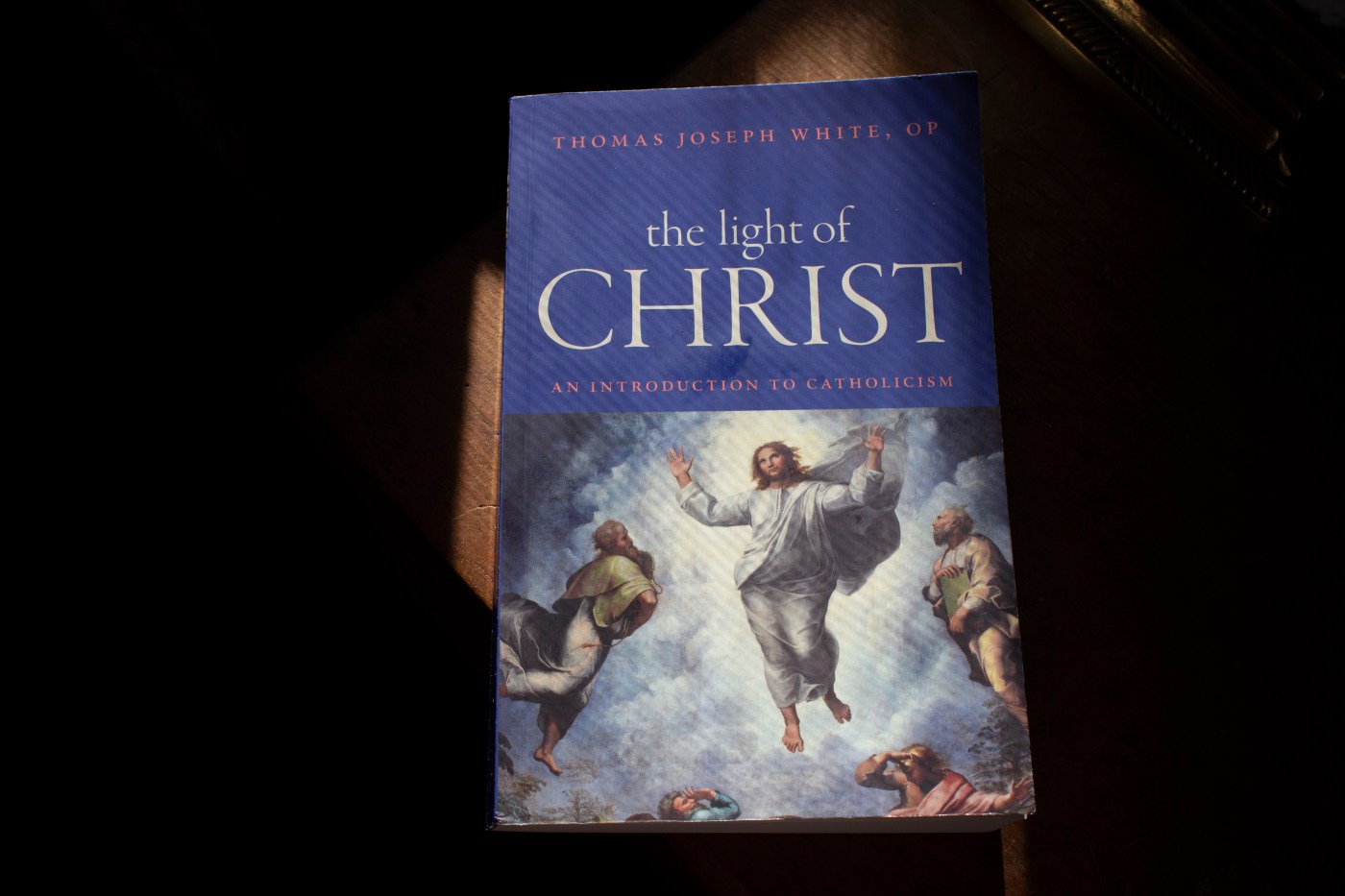
“Those who are truly Christian believe in the physical resurrection of Jesus from the dead. The resurrection of Jesus is not just a symbol. Rather, in the words of the Catechism of the Catholic Church, it is an event that is at once both “historical and transcendent.” God intervenes definitively in human history in the resurrection of Jesus, and in doing so reveals definitively the transcendent mystery of who God is and of what he intends for humanity.
The ancient world had no illusions about the reality of death. The Jews of the time of Jesus experienced the Roman political oppression and execution as regular features of ordinary life. Jews knew the difference between the idea that a martyr who has died lives on with God in his immortal soul (awaiting resurrection), and the claim that a person who has truly been put to death is now truly alive physically, in a transformed state, by the power of God. For the Jews of the time of Jesus, resurrection was associated with the end times, the eschaton, and with God’s final judgment of the entire human race. It was looked forward to as a mystery of God’s vindication of Israel, his glorification of the physical world, and the definitive salvation of the human race. This is why Christ’s disciples find strange his foretelling that he will be crucified and rise from among the dead. They cannot understand the idea that only one person would rise, and not the entire human race at the end of the world. In short, the resurrection of Jesus upsets the expectations of the religious Jews of Jesus’ age: it inaugurates the end times, but it does so in a curious fashion, by initiating the time of the “ekklesia”: the ecclesial gathering of all the nations in the universal or “Catholic” Church.
The resurrection of Jesus is a mystery of faith that is not subject to historical proof, but belief in the mystery does help to explain reasonably the historical genesis of the early Christian movement. In the time of Jesus, various messianic claimants had come and gone (mostly political revolutionaries), and after their deaths their movements died out. The early Christians told a very different story: they claimed that their own leaders had fled in fear of death when Jesus was arrested. They claimed to have lost faith in him almost immediately. Their argument that the tomb he was buried in was found empty three days later went uncontested by their adversaries, who seemingly accepted the truth of this statement. Their assertion that Jesus appeared to many of them after his death was not something that made them popular either with Jewish religious leaders or with gentiles, be they political leaders or the intelligentsia. On the contrary, the early Christians were mocked, beaten, and killed systematically for their beliefs, which gained them no worldly honors or accolades. And yet they willingly gave their lives for what they took to be an irrefutable truth: that God had raised Jesus from the dead. Furthermore, their ministry was encompassed by public miracles that confirmed the message they preached: that God had acted definitively in history in the mystery of the resurrection.
Historical belief in the resurrection, then, is not irrational but is historical. It does mean putting one’s faith in the testimony of the apostles, but that act of belief is not unreasonable. What, however, is the resurrection of Jesus? What does it mean to say that Jesus is glorified in his humanity, in both his spiritual soul and his body?
The resurrection is not merely a return of Jesus to an ordinary human life. It is a mystery of the radical transformation and glorification of our human state. In the diverse apparitions of the risen Christ that we can find throughout the New Testament (The Gospels, Acts, Paul, Revelation), there are two basic modes or contrasting states in which the life of the risen lord is presented. In one set of apparitions, such as with Mary Magdalene in the garden of the tomb in John 20, Jesus appears as an ordinary human being. The emphasis of such apparitions is on the reality of Jesus’ physical body. He is truly alive. So he asks for food to eat or makes the doubting apostle Thomas place his hands in his side. In another set of apparitions, particularly in Christ’s appearances to Saul of Tarsus and to John, the seer at Patmos receiving the apocalyptic vision of Revelation, Christ appears in his unhindered glory, and is overwhelming. Here the emphasis is on the transformed character of Christ’s glorified flesh and on the new royal authority he possesses as the universal judge of humanity and of the Church. The diverse apparitions, then, attest to both ordinariness and glory. Jesus is the new Adam who was dead and is now alive. He is also the principle and source of a new creation, he in whom all things are being remade.
Medieval theologians spoke about four properties of the resurrected body of Christ, each revealed either explicitly or implicitly in the New Testament. Impassibility is a characteristic denoted negatively: in his risen body Jesus is now incapable of being subject to suffering or death. The transformed state of his risen flesh is one in which he can die no more. The Lord is present to his Church throughout the ages, then, in his perennial risen life. Subtlety is a property concerned with the spiritualization of the material body. The physical body of Jesus is still material, but the matter of his body is so transformed by the glory of the resurrection as to be perfectly subject to the influence of the spiritual soul and the movements of the spiritual life. From this, there follows agility: we see in the Gospels that Christ can make himself present where he wills: to the apostles on the road to Emmaus, in the cloister of the Upper Room, on the shores of the Sea of Galilee. There is a mysterious power of the risen Lord to manifest himself to us as one who is no longer of this physical world and who lives in a glorified physical state. Finally, there is clarity or translucence. Jesus in his glorified state can illuminate those to whom he manifests himself, not only by his words but also by the very presence of his glorified body. This is true especially in his overwhelming appearances to Saul on the road to Damascus and to John on the island of Patmos. Through his human body, the Lord enlightens the hearts of his disciples to his radiant and triumphant presence.
The resurrection of Jesus from the dead affects all of humanity in at least two very basic ways. First, the resurrection of Jesus signals to the human race the definitive victory of God over all powers of evil, sin, and death. It is true that we still live in a world in which it often seems that death and injustice have the last say. However, the resurrection of Jesus reveals the final end of the world in an anticipatory fashion, and so it promises to us all the victory of God’s power, employed in the service of his mercy and love. In the end, as Julian of Norwich famously says, “all manner of things shall be well,” because in the end, the resurrected Lord is victorious over even the worst evils. We might even go as far as to say that in the crucifixion of Jesus, humanity has done the worst thing possible: we have killed God. And from that greatest of evils, God has brought forth the greatest possible goods: the forgiveness of sins, the restoration of grace, and the universal possibility of eternal life with God in the resurrection. Human history is still subject to immense and intense human and natural evils. Yet all of these real evils, however tragic and scandalously unjust they are, take place against the backdrop of the scandal of the Cross: of God’s subjecting himself to human suffering and death, and of God’s own ineffaceable and eternal victory of life, charity, and mercy.
Belief in the resurrection, then, is central to the Christian life and colors everything else. All suffering, all trials, and all of out finite historical existence are conditioned by knowledge of the glorification of Christ. It one believes that death is final, then one ultimately works by a different moral calculus. Neo-Gnosticism is characterized by a despair of the salvation of the body. The body then has its significance only in this world. “If the dead are not raised, ‘Let us eat and drink, for tomorrow we die.'” If one believes that physical death is not the final word, then this changes all of one’s practical decisions. “Do you not know that your body is a temple of the Holy Spirit within you, which you have from God? You are not your own.” The acceptance of the mystery of Easter change’s one’s life radically, and gives a horizon to human existence that is uniquely hopeful and joyous.
Second, the resurrection of Jesus reveals to us the final purpose for which the physical world was created in the first place. In and through a cast cosmic history God created a world in which living things could exist, and through a long, complex process God governed a world in which increasingly complex forms of life evolved. However, in the project of man, God elevated the material world into the realm of spirit and offered the human being living contact with God, spiritual friendship in a shared life of grace. This initial creation of the physical cosmos would allow human beings to marry and procreate reasonably and freely, educating their offspring as persons in communion with God. However, this initial mystery was itself meant to “evolve” spiritually and morally toward glorification: union with God by grace, and inward transformation of the physical life of man by the mysterious power of God. The mystery of the original sin of humanity brought this history of original grace to a crashing halt, and subjected man to the natural processes of decay and death. However, through the dynamic of the Cross, the Holy Spirit acts upon fallen humanity to remake us after the pattern of Christ. We can now become cooperators with the grace of God even in death, in view of the mystery of the resurrection. “We know that the whole creation has been groaning in travail together until now; and not only the creation, but we ourselves, who have the first fruits of the Spirit, groan inwardly as we wait for adoption as sons, the redemption of our bodies.” Jesus the new Adam, then, is the “Omega point” of the universe: the place that we see our lowly bodies transformed and divinized, where man is rendered fully alive by the power of God. In the resurrection of Christ we come to see the apex of the cosmic edifice, the orientation point that gives perspective to all else that is present in creation.
There are real presences of the resurrected Christ in our world. In his glorified life of the resurrection, Jesus is no longer a part of this physical cosmos, if by that we would mean that he would be somewhere “within” the physical world or contiguous with other physical realities. The glorified bodies of Christ and of the saints (such as that of the Virgin Mary) are of another order. However, the glorified body is not entirely “extrinsic” or outside the physical cosmos either. Jesus’ body remains in a mysterious relationship to the ongoing life of the Church, and he can render himself present to human beings in a variety of ways. First, there is a simple, almost indefinable, but utterly real presence of the risen Lord to all those who have the grace of supernatural faith. Christ is personally present to each of us, not only in his reality as God, but also in his sacred humanity, as a human being like us, in body and soul. The sense of his presence can be more faint or more acute at various times, and it can grow in us the more we are given to contemplative prayer and conversation with Christ. But it is enduring and undeniably real.
Second, Christ is present in and through his sacramental activity. The sacraments are instrumental causes of grace, as we will explore in the next chapter. Christ is present in us by his grace which he shares with us, and this in an especially clear way through his sacraments. Christ acts not only as God but also as man, to communicate grace to the faithful, in a through all seven of the sacraments. In six of these (baptism, confirmation, reconciliation, marriage, holy orders, anointing of the sick), the presence is operative in nature: it is Christ who acts or operates by grace, in and through the minister of the sacrament. However in the unique case of the Eucharist, the presence is not only operative, but also substantial: the glorified body of Christ is mysteriously and truly present substantially, under the appearances of bread and wine. By reserving the host in the tabernacle, every parish or chapel maintains the presence of Christ in the midst of our world. In this way, the Lord in his glory accompanies the Church down through the ages, sustaining her in her journey with his concrete presence. It is one that is perceptible only through the grace of faith, but it is eminently real all the same.
Christ is also present to the Church through the lives of his holy ministers, bishops, priests, and deacons in whole he may act, especially through the proclamation of the word of God and by holy preaching. He is present in his saints, who can be found in each age of the Church, manifesting the transformative holiness of Christ in the midst of our world. He is present also through special apparitions where he makes himself known to particular persons, often great saints like Francis of Assisi, Catherine of Siena, or Pio of Pietrelcina, but also great sinners like Jacques Fesch, who was transformed by such an experience. Catholics are not obliged to believe in any particular post-apostolic apparition of Christ or Virgin Mary. All such “events” are subject to the reasonable judgments of Christian prudence, as well as the sound discernment of the ecclesiastical hierarchy.
Jesus Christ is alive. He has the power to manifest himself in extraordinary ways to his closest friends, as well as those who consider themselves his enemies. He is present in his mystical body, the Church. We can see his face in the actions of ordinary Christians who act with charity. If we want to encounter the risen Lord ourselves, it is not difficult. Every human being can do so in the simplest and most direct way possible: by beginning to pray to Jesus.”
Thoma Joseph White, OP
The Light of Christ pg. 172-179
*
 theslowangel.com
Leave a comment